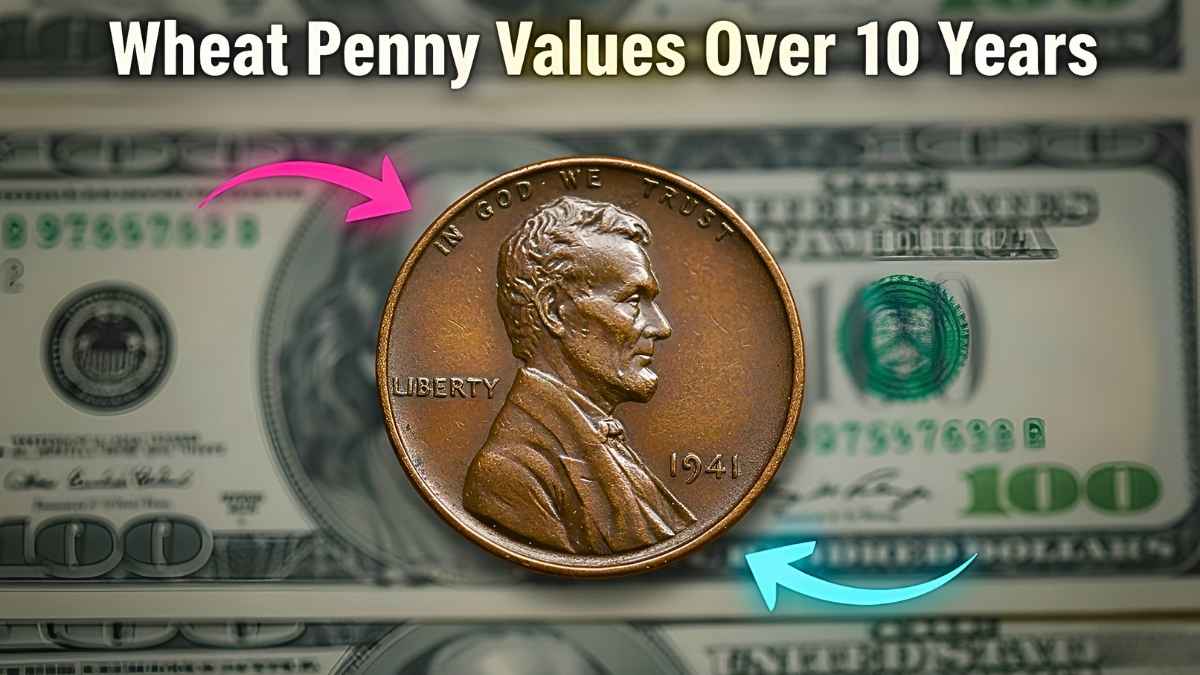
Wheat Penny Values Over 10 Years: Wheat Pennies are among the most beloved coins in American numismatics. Produced between 1909 and 1958, they feature Abraham Lincoln on the obverse and two wheat stalks on the reverse, symbolizing prosperity. Their historical significance, combined with their distinctive design, makes them highly collectible. Over the past decade, values for Wheat Pennies have shown notable fluctuations, influenced by rarity, condition, and collector demand. Understanding these trends helps collectors make informed decisions when buying, selling, or holding onto these coins.
Historical Context of Wheat Pennies
The introduction of the Wheat Penny in 1909 marked the centennial of Abraham Lincoln’s birth. Designed by Victor David Brenner, it was the first U.S. coin to feature a real person rather than a symbolic figure. The coin remained in circulation until 1958, when it was replaced by the Lincoln Memorial design. During its production, several key dates and minting errors emerged, creating coins that are now considered treasures. These historical factors continue to drive collector interest and influence values.

Factors That Influence Value
Several elements determine the value of Wheat Pennies. Rarity is the most significant factor, with coins produced in limited numbers or with minting errors commanding higher prices. Condition also plays a crucial role, as coins in uncirculated or mint state are worth far more than those showing heavy wear. Market demand, historical significance, and metal composition further contribute to value. Over the past ten years, these factors have combined to create dynamic shifts in pricing.
Value Trends Over the Past Decade
Examining Wheat Penny values over the last ten years reveals a steady increase in demand for rare and high-grade examples. Common dates in circulated condition have remained relatively stable, often valued at a few cents to a dollar. However, key dates such as the 1909-S VDB, 1914-D, and 1931-S have seen significant appreciation. Error coins, including double dies and off-center strikes, have also gained value as collectors seek unique pieces. Overall, the market has shown resilience, with rare Wheat Pennies consistently outperforming common issues.

Key Dates That Drive Collector Interest
Certain Wheat Pennies stand out as particularly valuable. The 1909-S VDB is prized for its historical significance as the first year of issue and its limited mintage. The 1914-D is another key date, with low production numbers making it highly sought after. The 1931-S, produced during the Great Depression, is rare and valuable in high-grade condition. These coins have consistently appreciated in value over the past decade, making them essential for serious collectors.
The Role of Mint Marks and Errors
Mint marks provide important clues about a coin’s origin and rarity. Coins struck at the San Francisco and Denver mints often had lower production numbers, increasing their value. Errors such as double dies, repunched mint marks, and off-center strikes add uniqueness and desirability. Over the past ten years, error coins have gained popularity, with collectors willing to pay premiums for distinctive examples. These factors highlight the importance of careful examination when assessing Wheat Penny values.

The Importance of Coin Grading
Professional grading has become increasingly important in determining Wheat Penny values. Coins graded as “Mint State” or “Proof” can command prices exponentially higher than those in lower grades. Grading provides confidence for buyers and sellers, ensuring fair market value. Over the past decade, the rise of grading services has contributed to more consistent pricing and greater transparency in the market. Collectors who invest in professionally graded coins often see stronger returns.
Everyday Treasure Hunting
One of the most exciting aspects of Wheat Pennies is the possibility of finding valuable examples in everyday settings. Stories abound of people discovering rare coins in jars of spare change, inherited collections, or even in circulation. This sense of possibility transforms ordinary transactions into treasure hunts. Over the past ten years, such discoveries have continued to inspire new collectors, fueling demand and keeping Wheat Pennies in the spotlight.

The Cultural Value of Collecting
Beyond monetary worth, Wheat Pennies offer a deeper connection to history and culture. Each coin tells a story about the era in which it was minted, reflecting economic conditions, artistic trends, and national priorities. Collecting Wheat Pennies fosters appreciation for craftsmanship and historical context, making it both a rewarding hobby and an educational pursuit. Over the past decade, this cultural value has remained strong, ensuring continued interest in these coins.
Subsidio Adultos Mayores 2026: Eligibility Requirements
Turning to another subject of great importance, the Subsidio Adultos Mayores program for 2026 represents a vital support system for older adults. This subsidy is designed to provide financial assistance to seniors who meet specific eligibility criteria. Requirements typically include reaching a certain age threshold, maintaining residency status, and meeting income levels that demonstrate financial need. The program ensures that vulnerable populations receive the support they need to maintain dignity and security in their later years.

Official Payment Calendar for 2026
The payment calendar for the Subsidio Adultos Mayores in 2026 is structured to provide regular, predictable financial support. Payments are scheduled throughout the year, allowing beneficiaries to plan their expenses with confidence. The calendar is published in advance, ensuring transparency and accessibility. Seniors and their families can rely on these payments as a stable source of income, helping to cover essential needs such as food, healthcare, and housing.
The Importance of Financial Support for Seniors
Financial assistance programs like the Subsidio Adultos Mayores play a crucial role in promoting social equity. As populations age, ensuring that seniors have access to resources becomes increasingly important. These subsidies help reduce poverty among older adults, improve quality of life, and foster independence. By providing consistent support, governments demonstrate a commitment to protecting the well-being of their citizens across all stages of life.

Linking Rare Coins and Social Programs
At first glance, rare coins and senior subsidies may seem unrelated. Yet they share a common theme: the value of overlooked resources. Just as a penny can hold hidden worth, so too can social programs provide essential support that might otherwise be underestimated. Both remind us to pay attention to the details, whether in our pockets or in public policy, because small things can make a significant difference.
Conclusion: Value Found in Unexpected Places
From the thrill of discovering a Wheat Penny worth $144,000 to the reassurance of a structured subsidy program for seniors, value often emerges where we least expect it. Coins and subsidies alike highlight the importance of awareness, attention, and appreciation. Whether searching through change or reviewing eligibility requirements, the lesson is clear: treasures, both financial and social, are all around us. Recognizing and respecting them enriches our lives and strengthens our communities.
