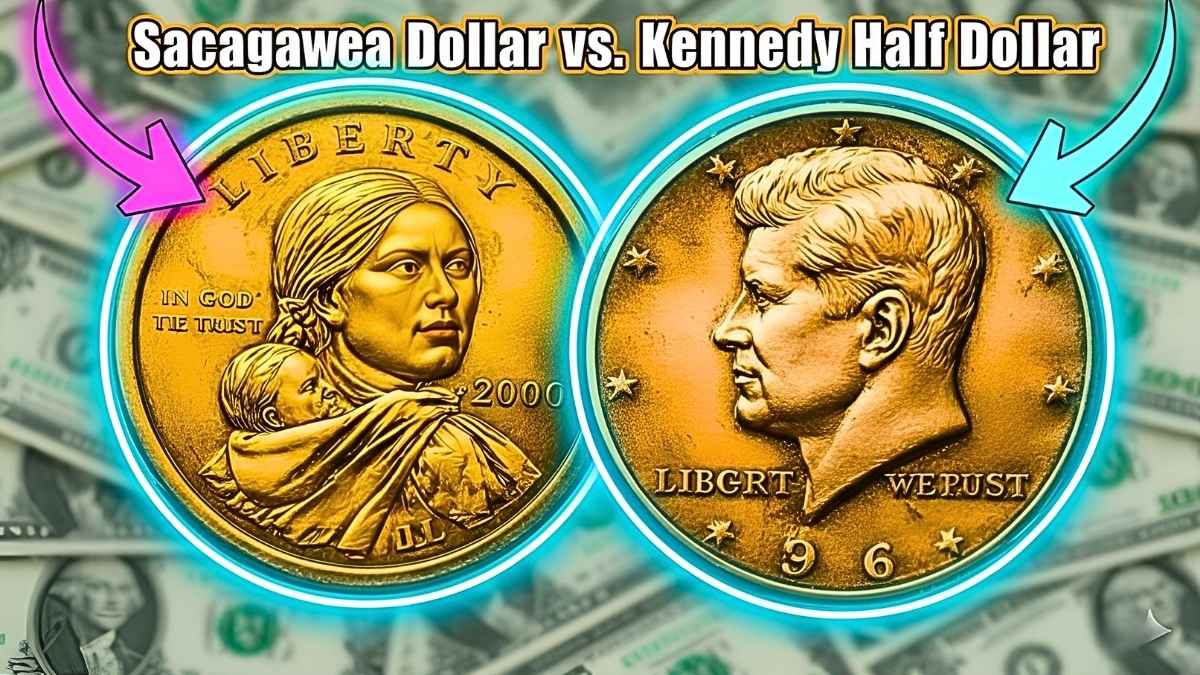
Sacagawea Dollar vs. Kennedy Half Dollar: American coinage has always reflected the nation’s history, values, and culture. Among the most celebrated coins are the Sacagawea Dollar and the Kennedy Half Dollar. Both coins carry deep historical significance, unique designs, and varying levels of collector interest. Choosing between them depends on understanding their origins, rarity, and long-term value. This guide explores the differences and similarities between these two coins, helping collectors make informed decisions.
The Origins of the Sacagawea Dollar
The Sacagawea Dollar was first introduced in 2000 as part of an effort to create a new dollar coin that would be both functional and symbolic. The coin features Sacagawea, the Shoshone woman who played a crucial role in guiding the Lewis and Clark expedition. Designed by Glenna Goodacre, the obverse shows Sacagawea carrying her infant son, Jean Baptiste, while the reverse initially depicted a soaring eagle. Later years introduced rotating reverse designs under the Native American $1 Coin Program. The coin was intended to replace the Susan B. Anthony Dollar, offering a more distinctive golden color and smoother usability.

The Origins of the Kennedy Half Dollar
The Kennedy Half Dollar was introduced in 1964, just months after the assassination of President John F. Kennedy. Designed by Gilroy Roberts and Frank Gasparro, the coin quickly became a symbol of national mourning and respect. The obverse features Kennedy’s profile, while the reverse shows the presidential seal. Initially struck in 90 percent silver, the coin’s composition changed over the years, eventually becoming copper-nickel clad. Despite its reduced use in circulation, the Kennedy Half Dollar remains one of the most recognizable and beloved coins in American history.
Design and Symbolism
The Sacagawea Dollar emphasizes Native American heritage and contributions to U.S. history. Its golden color and depiction of Sacagawea carrying her child symbolize guidance, resilience, and family. The Kennedy Half Dollar, on the other hand, reflects modern American leadership and patriotism. Its design captures Kennedy’s youthful profile and the presidential seal, representing strength and unity. Collectors often value these coins not only for their monetary worth but also for the stories they tell through their imagery.

Circulation and Availability
The Sacagawea Dollar was produced in large numbers but never gained widespread acceptance in everyday commerce. Many Americans preferred paper currency, leaving the coin to circulate primarily in limited contexts such as vending machines and transit systems. The Kennedy Half Dollar initially circulated widely in the 1960s and 1970s but gradually declined in everyday use. Today, both coins are more likely to be encountered in collector sets or rolls rather than in daily transactions.
Rarity and Collector Value
Rarity plays a significant role in determining collector value. For the Sacagawea Dollar, certain varieties such as the 2000 Cheerios Dollar, which features enhanced eagle tail feathers, are highly prized. Proof and special mint sets also carry added value. The Kennedy Half Dollar’s early silver issues, particularly the 1964 edition, are sought after for their precious metal content. Error coins, such as doubled dies or off-center strikes, add further intrigue. Over time, both coins have developed niches within the collector market, with specific editions commanding premium prices.

Investment Potential
When considering investment, collectors weigh both historical significance and market demand. The Kennedy Half Dollar, with its silver content in early issues, offers intrinsic value tied to precious metals. Its strong association with a beloved president ensures enduring demand. The Sacagawea Dollar, while less tied to metal value, benefits from its cultural significance and unique varieties. Long-term collectors often choose to hold both coins, recognizing that each offers distinct advantages in terms of appreciation and historical importance.
Everyday Treasure Hunting
One of the joys of coin collecting is the possibility of finding valuable pieces in everyday settings. Stories abound of people discovering rare Sacagawea Dollars in bank rolls or Kennedy Half Dollars in inherited collections. This sense of possibility transforms ordinary transactions into treasure hunts. Checking your change or exploring old coin jars becomes more than a habit; it becomes an opportunity to uncover hidden value.

The Cultural Value of Collecting
Beyond monetary worth, coin collecting offers a deeper connection to history and culture. The Sacagawea Dollar highlights the contributions of Native Americans, while the Kennedy Half Dollar reflects a pivotal moment in modern U.S. history. Collecting these coins fosters appreciation for craftsmanship and historical context, making it both a rewarding hobby and an educational pursuit. For many, the true value of a coin lies not only in its financial worth but also in the history it represents.
Subsidio Adultos Mayores 2026: Eligibility Requirements
Turning to another subject of great importance, the Subsidio Adultos Mayores program for 2026 represents a vital support system for older adults. This subsidy is designed to provide financial assistance to seniors who meet specific eligibility criteria. Requirements typically include reaching a certain age threshold, maintaining residency status, and meeting income levels that demonstrate financial need. The program ensures that vulnerable populations receive the support they need to maintain dignity and security in their later years.

Official Payment Calendar for 2026
The payment calendar for the Subsidio Adultos Mayores in 2026 is structured to provide regular, predictable financial support. Payments are scheduled throughout the year, allowing beneficiaries to plan their expenses with confidence. The calendar is published in advance, ensuring transparency and accessibility. Seniors and their families can rely on these payments as a stable source of income, helping to cover essential needs such as food, healthcare, and housing.
The Importance of Financial Support for Seniors
Financial assistance programs like the Subsidio Adultos Mayores play a crucial role in promoting social equity. As populations age, ensuring that seniors have access to resources becomes increasingly important. These subsidies help reduce poverty among older adults, improve quality of life, and foster independence. By providing consistent support, governments demonstrate a commitment to protecting the well-being of their citizens across all stages of life.

Linking Rare Coins and Social Programs
At first glance, rare coins and senior subsidies may seem unrelated. Yet they share a common theme: the value of overlooked resources. Just as a coin can hold hidden worth, so too can social programs provide essential support that might otherwise be underestimated. Both remind us to pay attention to the details, whether in our pockets or in public policy, because small things can make a significant difference.
Conclusion: Choosing the Right Coin
From the cultural significance of the Sacagawea Dollar to the historical weight of the Kennedy Half Dollar, each coin offers unique advantages for collectors. The Sacagawea Dollar emphasizes heritage and resilience, while the Kennedy Half Dollar reflects leadership and patriotism. Both coins have proven to be valuable additions to collections, whether for investment, historical appreciation, or personal enjoyment. In the end, choosing the right coin depends on what resonates most with the collector’s interests and goals.